
Choosing a Basin That Suits Your Bathroom Space
Start With the Space, Not the Basin
It is tempting to fall for a basin before you have measured anything, especially when you spot a beautiful countertop bowl online. But basins are one of the few bathroom purchases where the room genuinely dictates the choice. Before you look at styles, spend ten minutes with a tape measure and a notepad. Note the width of the space between the walls, the distance from the floor to any window sill, and where the door swings. A basin that looks generous in a showroom can feel cramped once it is wedged beside a shower screen, and a basin that looks modest on a webpage can be perfectly proportioned in a small cloakroom.
The key measurements are straightforward. You want at least 600mm of clear floor space in front of the basin so you can stand comfortably and lean in to brush your teeth. Aim for a basin rim height of around 800mm to 850mm from the floor for a standing adult, or lower if children will use it regularly. If the basin sits beside a toilet, leave a gap of at least 200mm between them so elbows and hips have somewhere to go. Get these basics right and the rest of the decision becomes far easier.
Pedestal Basins: Simple, Solid and Space-Saving
Pedestal basins remain the default choice in many UK homes for good reason. The column hides the trap and pipework, the basin itself is supported on the floor, and the whole thing is stable enough to lean on without flexing. They suit period properties and modern bathrooms alike, and because they need no wall reinforcement beyond standard fixings, they are often the easiest option to install in an older house.
Their weakness is storage. A pedestal eats the floor space directly beneath the bowl, which is exactly where a small bathroom would most like a cabinet. If storage matters more than a clean look, consider a semi-pedestal design instead: it hides the pipework at the back while leaving the sides open, so it can sit over a small vanity unit or leave room for a laundry basket. Also check the pedestal height against your waste pipe, since a tall pedestal may not clear a low-level outlet without adjustment.
Countertop Basins: Generous, but Plan the Unit First
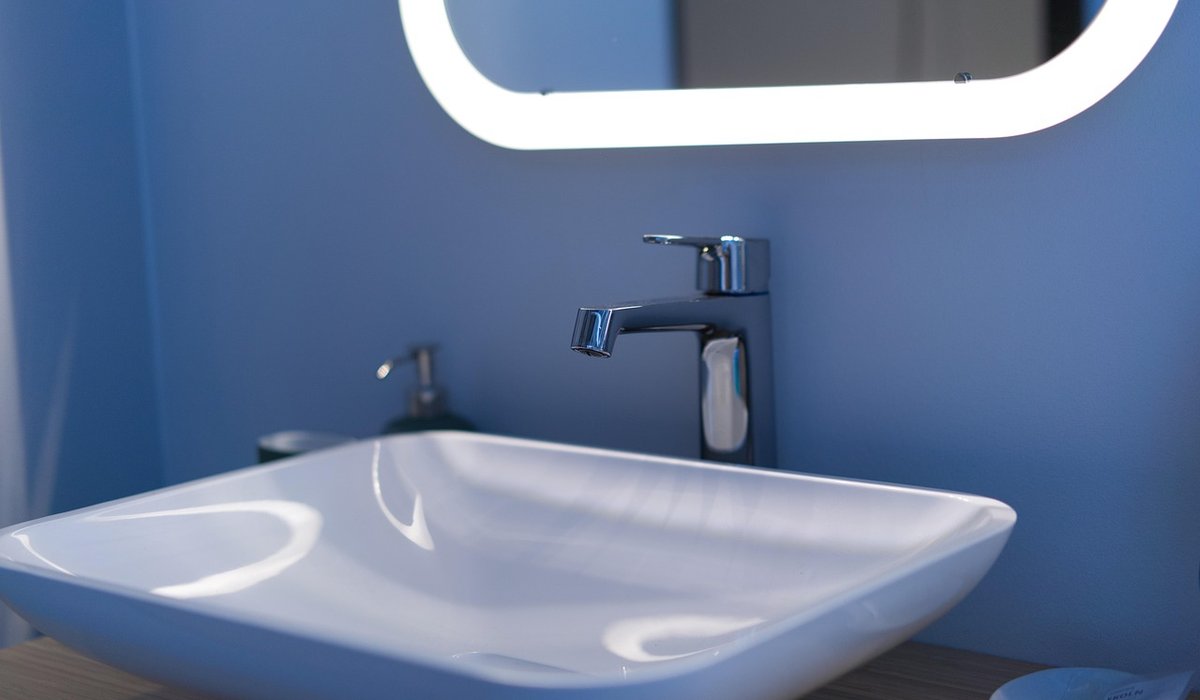
A countertop basin, sometimes called a vessel basin, sits on top of a worktop or vanity rather than being set into it. This gives a spacious feel and a certain hotel-like quality, and it can work beautifully in a large family bathroom or an ensuite with room to spare. The trade-off is height and reach. Because the bowl sits above the counter, the rim ends up much higher than a standard basin, so you need to lower the counter or accept a taller working height. A rim around 900mm from the floor is comfortable for most adults; much higher and children will need a stool.
Countertop basins also need a taller tap, and the tap must be positioned so that water lands in the bowl rather than on the worktop behind it. Check whether your chosen basin comes with a pre-drilled tap hole or none at all, as many vessel basins are designed for wall-mounted or deck-mounted tall mixers. Finally, think about splash. Water tends to travel further from a high rim, so a splashback or a tiled upstand behind the basin is worth planning in from the start.
Wall-Hung Basins: Clean Lines and Easy Cleaning
Wall-hung basins float clear of the floor, which makes mopping underneath effortless and gives the illusion of more space in a tight room. They are ideal in small ensuites and cloakrooms where every centimetre of floor counts. The catch is that they need a solid wall, or at least robust framing, to carry the weight of the basin, water and a person leaning on it. In a stud partition wall, this usually means adding timber noggins or a concealed support frame before the plasterboard goes on, so plan this before tiling rather than after.
Because there is no pedestal, the waste and trap are visible unless you fit a bottle trap in a matching finish or box them in. Many wall-hung basins are supplied with a shrouded trap that looks neat but can be fiddly to clean around. Also confirm the waste position: some basins have the outlet at the back centre, others offset, and a mismatch with your existing soil or waste run can turn a simple swap into a plumbing job.
Check Tap Holes, Waste and Clearance Before You Buy
This is where most basin purchases go wrong, so treat it as a checklist rather than an afterthought.
- Tap holes: Count them, and note the spacing. A one-tap-hole basin suits a single mixer; two holes suit separate hot and cold taps or a mixer with a spout and separate handles; three holes (often 200mm apart) suit a traditional bridge mixer. If you want a wall-mounted tap, choose a basin with no holes at all.
- Waste type: Decide between a slotted waste, needed when the basin has an overflow, and an unslotted waste for basins without one. Buying the wrong one is a common and annoying mistake.
- Waste position: Check whether the outlet is at the back or centre, and measure the height of your existing trap and pipework. A low outlet may not meet a standard bottle trap without adjustment.
- Clearance: Confirm space for the door to open, for a towel rail beside the basin, and for the mirror or cabinet above. Leave at least 200mm between the tap and the underside of any wall cabinet so you can get your hands under the spout.
- Overflow and waste kit: Many basins are sold as the ceramic only, with the waste and trap as extras. Budget for these rather than discovering the cost at the till.
Matching the Basin to How You Actually Live
A basin is used more than almost anything else in the home, so let daily habits guide the final choice. A busy family bathroom benefits from a wider basin or a double setup, and from a design with a flat base that is easy to wipe down. A cloakroom used mainly for handwashing can take a compact wall-hung model with a slim depth of around 350mm. A period property often looks best with a classic pedestal and a traditional tap, while a modern ensuite suits a clean countertop or wall-hung design.
Before ordering, do one last sanity check in the room itself. Mark the proposed width and height on the wall with masking tape, stand in front of it, and imagine your morning routine. If the tape feels tight or the height feels wrong, the basin will too. Choosing well now means years of comfortable, unremarkable use, which is exactly what a good basin should deliver.

4 Comments